

My new book, Heat and Light, is a novel about the fracking boom in Pennsylvania. In a deeper way, it’s also a story about addiction, that perverse human compulsion to poison ourselves in much the way heavy industry poisons the land. Bakerton—the town in my novel—has a thriving bar culture, which is out in the open, and a methamphetamine problem, which nobody talks about. My character Dick Devlin worked in the coal mines until his job disappeared; then he opened a tavern. His younger son is a recovering addict who works as a counselor in a methadone clinic, and his older son, a corrections officer in a prison full of drug offenders—an entire family working in the addictions business. In Bakerton, as everywhere, drinking and drugging are baked into the culture. For the addict and everyone around him, the consequences are profound. Tolstoy's famous observation about families—all unhappy ones are different—applies equally to stories about addiction. Addicts come from all walks of life. Each journey into (and out of) addiction is singular as a fingerprint. These seven books—three story collections and four novels—look at addiction in some of its infinite varieties.
-
.

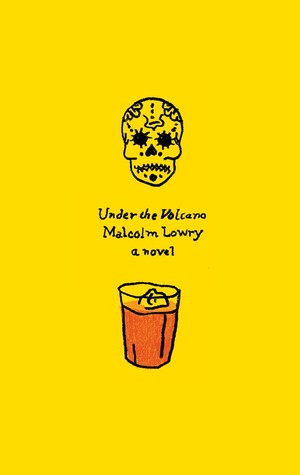
Under the Volcano
By Malcolm Lowry
When Malcolm Lowry’s seminal novel was first published in 1947, it caused a sensation; by the time of his death, it had gone out of print. Fifty years later it is widely recognized as a masterpiece. Geoffrey Firmin, known as the Consul, is a British ex-diplomat living in the small Mexican town of Quauhnahuac. He is also an end-stage alcoholic. Lowry follows him on the final day of his life—the Day of the Dead, November 2, 1938. A searing portrait of the addict in extremis.
-
.

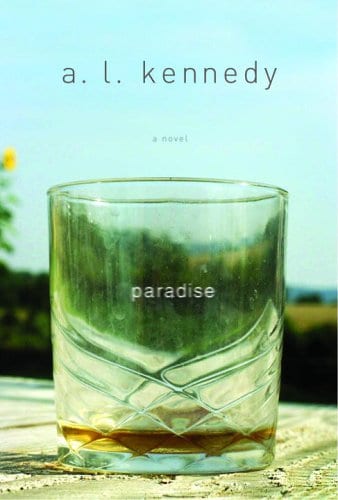
Paradise
By A. L. Kennedy
Nominally covering territory similar to Lowry’s, this stunning 2005 novel by the Scottish writer A.L. Kennedy could not be more different. What makes it so extraordinary is the narrative voice. The narrator, a young Scottish woman charging toward oblivion, tells her own story in a voice like no other: sharp, painfully funny, and suffused with startling insight.
.
-
.

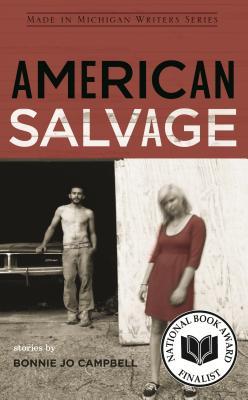
American Salvage and Burning Bright
By Bonnie Jo Campbell and Ron Rash
These two indelible story collections look at the methamphetamine epidemic in rural America from surprising perspectives: the family whose vacation cottage has been invaded by meth cooks, the ten year-old boy who retreats into fantasy to escape his addicted parents, the elderly couple whose addict son has turned them out of their house. These stories are inextricably bound to culture and landscape: Campbell’s Michigan Rust Belt, Rash’s Appalachian North Carolina. Both examine the ways addiction reverberates through an entire community, to devastating effect.
-
.

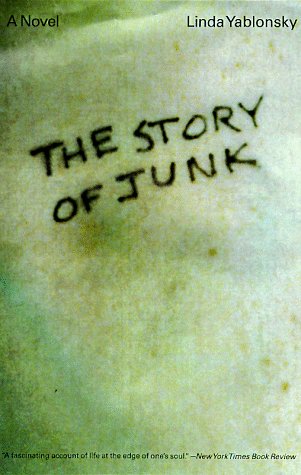
The Story of Junk
By Linda Yablonsky
First published in 1997, this is a forgotten jewel of a novel, an unsparing look at New York’s downtown heroin scene in the early 1980s. The only novel by the art critic Linda Yablonsky, this searingly honest first-person narrative vividly evokes its time and place and yet seems utterly fresh, strikingly relevant to the current moment.
.
-
.

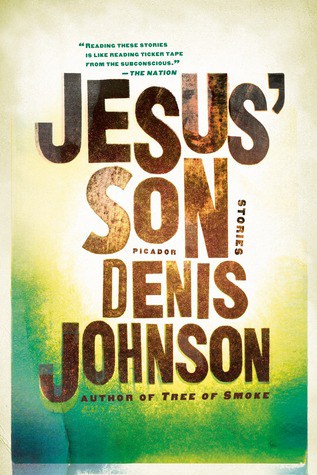
Jesus’ Son
By Denis Johnson
Published in 1992, Denis Johnson’s slender collection of stories narrated by a lost heroin addict named Fuckhead has been so widely imitated that it’s become a genre all to itself. During my time at the Iowa Writer’s Workshop, this was the book on every writer-boy’s shelf, and that was enough to make me resist it. When I finally cracked it open years later, I read it twice in two days. It crackles with stealth humor and shattering insight into the low life. Johnson writes a sentence like nobody else.
-
.
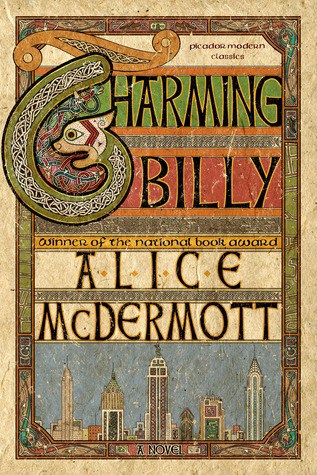
Charming Billy
By Alice McDermott
For my money, this is the greatest American novel on the subject of addiction, though it’s reductive to call it that. Alice McDermott’s haunting portrait of the drinker Billy Lynch, beloved son and cousin and uncle of a working class Irish American clan in postwar New York City, is a novel of heartbreak. McDermott finds the poetry in ordinary lives, in human goodness and frailty. This is a miraculous book.
.